General Dentistry
Children's Dentistry
Children's Dentistry Explained
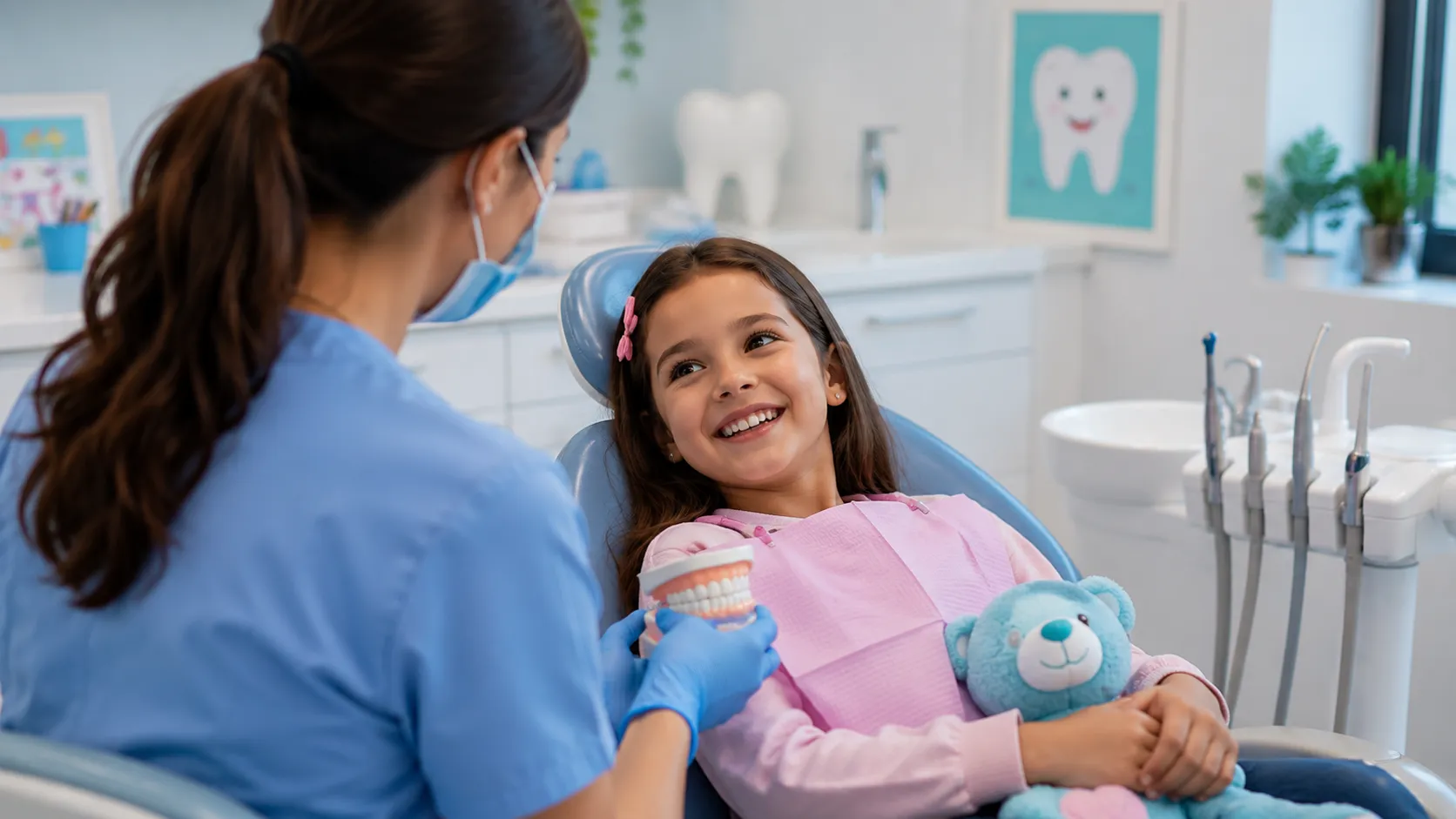
Children's dentistry, also called pediatric dental care, focuses on the unique oral health needs of infants, children, and adolescents. At Nova Dental Care of Vienna, we provide gentle, age-appropriate care designed to keep young teeth healthy while building positive associations with the dentist that last a lifetime. Childhood is when oral health habits and attitudes are formed, and our goal is to make sure those foundations are strong.
Pediatric dental care covers a wide range of services including the first dental visit (recommended by age 1), preventive cleanings and exams, dental sealants on permanent molars, fluoride treatments, fillings for cavities, and monitoring of growth and development. We also address common concerns like thumb-sucking, pacifier use, teething, tooth eruption patterns, and early orthodontic indicators. For some children, we may recommend referral to a pediatric dental specialist for complex cases.
Beyond clinical care, much of children's dentistry is about education and behavior management. We teach age-appropriate brushing and flossing techniques, discuss how diet affects dental health, and help children understand what's happening at their dental visits in language they can understand. We also work closely with parents, providing guidance on everything from when to start brushing to managing dental anxiety to addressing habits that can affect tooth development. Our approach is gentle, patient, and focused on creating positive experiences.

Children's Dentistry Approach
Children aren't just small adults. They have unique needs, fears, and ways of communicating, and dental care for kids requires a different approach than adult dentistry. At Nova Dental Care of Vienna, we take time to build trust at every visit, explain things in age-appropriate terms, and never rush a child through care.
We focus heavily on prevention because protecting baby teeth and emerging permanent teeth is far easier than fixing problems after they develop. We teach kids how to take care of their own teeth and we partner with parents on home care, nutrition, and habits. When treatment is needed, we use gentle techniques and clear communication to keep kids comfortable. The goal is for every child to leave our office feeling proud of taking care of their teeth and excited about the next visit.

Four simple steps, every time.
From the moment you sit down to the moment you leave, here's what a routine cleaning and exam looks like at our Chantilly office.
Introduce
First visits focus on building comfort with the dental setting, often starting with simple counting of teeth and gentle exams.
Prevent
Regular cleanings, fluoride treatments, and dental sealants protect young teeth from cavities during the highest-risk years.
Guide
We teach age-appropriate brushing, flossing, and nutrition habits while monitoring growth and development of teeth and bite.
Monitor
Ongoing visits track changes in development and identify any concerns early, when intervention is simplest.
Children's Dentistry FAQs
The American Academy of Pediatric Dentistry recommends a first dental visit by age 1 or within 6 months of the first tooth erupting. Early visits allow us to assess development, discuss home care with parents, and most importantly, help children become comfortable with the dentist before any treatment is needed. Early positive experiences set the stage for lifelong oral health.
Yes, dental X-rays are safe when used appropriately. Modern digital X-rays expose patients to extremely low levels of radiation, far less than traditional film X-rays. We use lead aprons and thyroid collars and only take X-rays when necessary to detect problems that aren't visible during a clinical exam. The diagnostic benefit far outweighs the minimal risk.
Brush twice daily with a fluoride toothpaste appropriate for their age, floss daily once teeth are touching, limit sugary snacks and drinks (especially between meals), avoid bottles or sippy cups containing milk or juice at bedtime, and bring your child for regular dental cleanings and exams. Dental sealants on permanent molars and fluoride treatments provide additional protection.
Dental anxiety is common in children and we have many techniques to help. We use age-appropriate language, explain procedures before doing them, take breaks when needed, and never rush. For some children, distractions like videos or toys help. For more significant anxiety, we may discuss options like nitrous oxide. Most children who start dental visits early and have positive early experiences develop comfort over time.
Yes, baby teeth are very important. They guide proper development of the jaw and surrounding tissues, hold space for permanent teeth, are essential for speech development, and allow proper nutrition. Cavities in baby teeth can cause pain, infection, and damage to developing permanent teeth below. Healthy baby teeth set the stage for healthy permanent teeth.
Dental sealants are thin protective coatings applied to the chewing surfaces of permanent molars to prevent cavities. The deep grooves on these teeth can be hard to clean, and sealants smooth out the surface to keep food and bacteria from getting trapped. Sealants are highly effective and recommended for most children when their permanent molars come in, typically around ages 6 and 12.
Yes, but the amount depends on age. For children under 3, use a smear (rice grain size) of fluoride toothpaste. For children 3 to 6, use a pea-sized amount. Help children brush effectively until they have the dexterity to brush thoroughly on their own, typically around age 8. Fluoride significantly reduces cavities and strengthens developing teeth.
We recommend an orthodontic evaluation by age 7 to assess the bite and tooth alignment. Most children won't need treatment that young, but some early issues benefit from interceptive treatment that can simplify or prevent more extensive orthodontics later. We monitor development at every visit and refer to an orthodontist when appropriate.
Most children naturally stop thumb-sucking or pacifier use between ages 2 and 4. Continued sucking habits beyond age 4 can affect tooth alignment and bite development. Approaches include gentle reminders, positive reinforcement for stopping, identifying triggers, and avoiding shaming. If habits persist past age 4 or 5, we can discuss strategies including potential dental appliances. Most kids stop with patience and gentle encouragement.